
Somewhere between a third and a quarter of the population is missing at least one wisdom tooth, and some people never develop any of the four at all. So what if you don’t have wisdom teeth — is that something to celebrate, worry about, or simply ignore?
The short version: it’s more common than most people think, and it’s generally good news for your future dental health.
Why Some People Never Develop Them
Wisdom tooth agenesis — the technical term for never developing one or more wisdom teeth — is largely genetic. If your parents or siblings are missing wisdom teeth, there’s a reasonable chance you are too. It’s thought to be part of a broader evolutionary trend toward smaller jaws that simply don’t have room, or need, for a third set of molars.
Researchers who study this link it to changes in human diet over thousands of years — softer, more processed food requires less jaw development and chewing force than the diet of early humans, and jaws have gradually adapted by shrinking. What if you don’t have wisdom teeth at all, genetically speaking? You’re simply further along that same evolutionary trend than someone with a full set.
Is It Actually Rare?
Not particularly. Studies estimate that somewhere around 20 to 25% of people are missing at least one wisdom tooth, and it’s not unusual to be missing all four. It’s far from universal, but it’s common enough that dentists don’t consider it unusual or a cause for concern on its own.
Rates also vary somewhat by ancestry and population, with some groups showing notably higher rates of missing wisdom teeth than others. None of this variation carries any health significance on its own — it simply reflects genetic diversity in jaw and tooth development.
What It Means for Your Oral Health
Missing wisdom teeth generally means one less area of your mouth prone to impaction, crowding, and the infections that come with a partially erupted tooth. It doesn’t mean you’re off the hook for dental care altogether — cavities, gum disease, and everything else can still affect your remaining teeth exactly the same way.
How to Know If You’re Missing Them
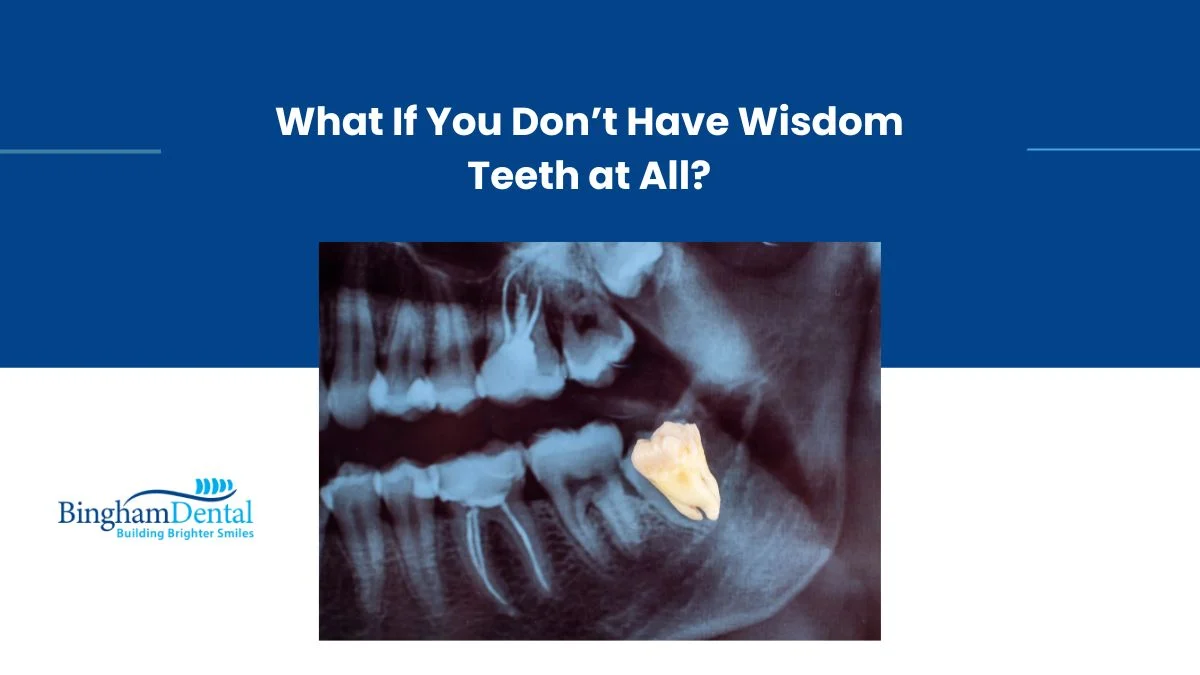
The only reliable way to know for certain is a dental X-ray. Wisdom teeth can be absent entirely, present but still developing below the gumline, or fully formed and simply never erupted — each of which looks different on an image but feels identical from the outside.
This is exactly why so many people are surprised to learn what if you don’t have wisdom teeth turns out to be true for them — you can’t tell just by feeling around with your tongue or counting how many teeth show up in the mirror. A routine panoramic X-ray, often taken at a regular checkup, is really the only definitive answer.
Should You Still See a Dentist Regularly
Yes, without question. Not having wisdom teeth removes one specific risk, but it changes nothing about the need for regular cleanings, exams, and X-rays to catch decay or gum disease in your other teeth early.
What This Means Long-Term
Over a lifetime, having a complete set of 28 rather than 32 teeth generally means one fewer area prone to the crowding, infection, and impaction issues that send other people in for extraction surgery later in life. It’s a small but genuine advantage that plays out quietly over decades rather than something you’d notice day to day.
That said, what if you don’t have wisdom teeth but still develop other dental issues down the road? The absence of wisdom teeth doesn’t provide any protection against cavities, gum disease, or normal wear — it simply removes one specific risk from the list, leaving everything else exactly as important as it would be otherwise.
What If Only Some of Your Wisdom Teeth Are Missing
It’s common to be missing one, two, or three wisdom teeth while still developing the rest. In these cases, the teeth you do have follow the same rules as anyone else’s — they need monitoring for impaction, crowding, and infection risk just like a full set would, even though you’re missing one or more from the total.
A dental X-ray will show exactly how many you have and where each one sits, which is the only way to know your specific situation rather than assuming it matches a friend’s or family member’s experience.
Missing Wisdom Teeth vs. Other Missing Teeth
It’s worth distinguishing wisdom tooth agenesis from losing a tooth to decay, injury, or extraction — those situations are treated very differently by dentists. A missing wisdom tooth that never developed generally needs no treatment at all, while a missing tooth elsewhere in the mouth often affects chewing, bite alignment, and the health of neighboring teeth, and may need replacement.
This distinction is part of why a dentist reviewing your X-rays looks closely at exactly which teeth are absent and why, rather than treating every gap in your smile the same way.
What About Wisdom Teeth That Are Still Developing?
In younger patients, a wisdom tooth that hasn’t erupted yet doesn’t necessarily mean it’s absent — it may simply still be forming below the gumline. Dentists typically don’t consider a wisdom tooth confirmed missing until a patient is old enough that the tooth would normally have appeared, usually somewhere in the late teens to early twenties.
For a teenager, an X-ray showing no visible wisdom teeth yet is often simply too early to tell one way or the other, and a follow-up image a few years later gives a more definitive answer.
Does It Run in Families?
Yes, in a meaningful way. Since jaw size and tooth development are largely inherited, siblings and close relatives often share similar patterns when it comes to wisdom teeth — if your parents were both missing several, there’s a reasonably good chance you’ll follow a similar pattern, though genetics don’t guarantee an identical outcome for every family member.
A Simple Way to Bring It Up at Your Next Visit
If you’ve never had this confirmed, it’s a perfectly normal thing to ask about at a routine cleaning rather than needing a special appointment. Your dentist can typically answer the question using X-rays already on file, or take a new one if it’s been a while, without adding meaningfully to the length of your visit.
The Bottom Line
Missing some or all of your wisdom teeth isn’t something to worry about — it’s a common genetic variation that, if anything, works slightly in your favor over a lifetime of dental care. The only real action item is confirming your specific situation with an X-ray, so you know rather than assume.
Frequently Asked Questions
Q: Is it okay to have no wisdom teeth?
It’s completely okay, and in most respects genuinely fortunate — having no wisdom teeth means avoiding the impaction, crowding, and infection risks that come with them.
There’s no functional downside to missing them, since modern diets and jaw structure don’t rely on a third set of molars the way ancestral human diets once did.
Q: Is it rare to have no wisdom teeth at all?
It’s not rare — roughly a fifth to a quarter of people are missing at least one wisdom tooth, and being missing all four isn’t unusual either.
Genetics play the biggest role, so if close family members are missing wisdom teeth, it’s reasonably likely you might be too.
Q: Can you go your whole life without wisdom teeth?
Yes — plenty of people never develop wisdom teeth at all and go their entire lives without ever needing to think about them.
For these individuals, there’s genuinely nothing to plan for or monitor related to wisdom teeth specifically, though regular dental checkups for everything else still matter.
Q: What does it mean if you don’t get wisdom teeth?
If you never get wisdom teeth, it most likely means they simply never developed, which is a common genetic variation rather than a sign of any health problem.
In rare cases, a wisdom tooth can be present but still forming below the gumline and not yet visible, which is why a dental X-ray is the only way to know your situation for certain.
Conclusions
What if you don’t have wisdom teeth turns out to be a fairly simple question with a reassuring answer: it’s common, it’s genetic, and it generally works in your favor. The only real to-do is confirming your situation with an X-ray rather than guessing. Everything else about your dental care routine stays exactly the same.
If you’ve never had it confirmed either way, Bingham Dental in Magna can check with a quick X-ray at your next visit.