
Professional dental care and at-home hygiene work together — and neither is fully effective without the other. While regular visits to Bingham Dental are essential for catching problems early and removing buildup that can’t be addressed at home, the habits you maintain every single day between appointments are what determine the long-term health of your teeth and gums. The good news is that an effective daily routine doesn’t have to be complicated.
Brushing: Getting the Basics Right
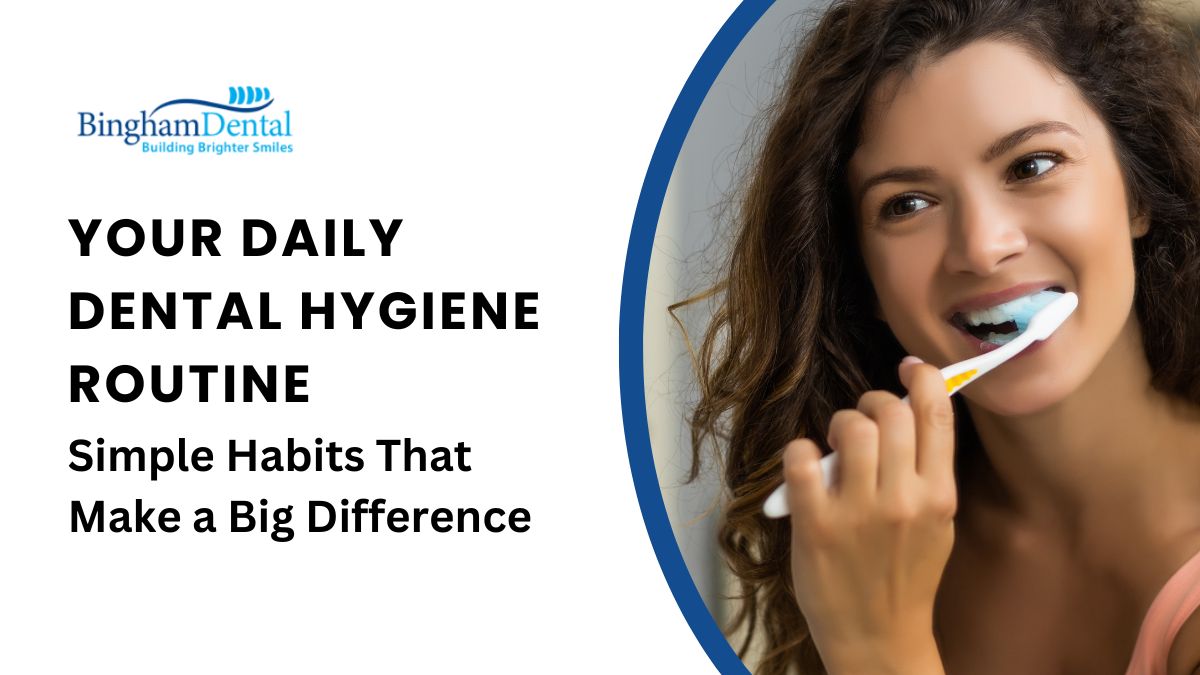
Brushing your teeth twice a day — morning and before bed — is the cornerstone of at-home oral care. But technique matters as much as frequency. Use a soft-bristled toothbrush and hold it at approximately a 45-degree angle to the gumline, using small, gentle circular or back-and-forth motions. Avoid pressing too hard, since aggressive brushing can actually wear down enamel and irritate gum tissue over time.
Spend at least two minutes brushing — most people underestimate how short their actual brushing sessions are. Electric toothbrushes can be particularly helpful for maintaining consistent technique, and many have built-in timers. Use a fluoride toothpaste to help strengthen enamel and protect against decay.
Flossing: The Step Most People Skip
Flossing once a day is one of the most impactful things you can do for your long-term gum and tooth health, and it’s also one of the most commonly skipped steps. Toothbrushes simply can’t reach the spaces between teeth, where plaque accumulates and gum disease most often begins. Flossing clears these spaces effectively when done correctly.
Use about 18 inches of floss, wrapping most of it around your middle fingers so you have a fresh section for each gap. Guide the floss between teeth with a gentle zigzag motion rather than snapping it down. Curve it into a C-shape around each tooth and slide it gently under the gumline. If traditional string floss is difficult, floss picks, interdental brushes, or water flossers are all reasonable alternatives that make the habit more accessible.
Rinsing: A Helpful Addition, Not a Replacement
Mouthwash can be a useful addition to your hygiene routine for freshening breath, delivering fluoride, or reducing bacteria. Antibacterial mouthwashes can help control plaque buildup, particularly for patients prone to gum disease. Fluoride rinses offer an extra layer of protection against cavities. However, mouthwash is an addition to — not a replacement for — brushing and flossing, which do the mechanical work of actually removing plaque.
Diet and Lifestyle Habits That Impact Your Smile
What you eat and drink matters significantly for your dental health. Sugary foods and drinks feed the bacteria that produce enamel-eroding acids. Acidic beverages — including soft drinks, citrus juices, and sparkling water — can erode enamel directly over time. Sipping water throughout the day, especially fluoridated tap water, is one of the simplest and most beneficial things you can do between meals.
Tobacco use in any form significantly increases the risk of gum disease, tooth decay, tooth loss, and oral cancer. If you smoke or use other tobacco products, talking with your medical and dental providers about cessation resources is worth prioritizing.
Conclusion
A consistent daily oral hygiene routine is the most powerful tool you have for maintaining healthy teeth and gums between dental visits. Brushing twice a day, flossing daily, using mouthwash thoughtfully, and making smart dietary choices all add up to meaningful long-term protection for your smile.
Frequently Asked Questions
Is an electric toothbrush better than a manual one?
Research suggests electric toothbrushes can be more effective at removing plaque, particularly for patients who struggle with technique. That said, a manual toothbrush used correctly is very effective. Use whichever you’ll use consistently and well.
How do I know if I’m brushing too hard?
Signs include fraying of toothbrush bristles more quickly than expected, gum recession, and tooth sensitivity near the gumline. Switching to a soft-bristled brush and lightening your pressure can help.
What’s the best time to floss — morning or night?
Flossing before bed is particularly beneficial since it removes the day’s plaque before you sleep, when saliva flow decreases and bacteria can be more active. The most important thing is doing it consistently.
Can rinsing with mouthwash replace brushing or flossing?
No — mouthwash doesn’t remove plaque mechanically the way brushing and flossing do. It’s a helpful addition to a complete routine, not a shortcut.
How often should I replace my toothbrush?
Every three to four months, or sooner if the bristles look frayed. A worn-out brush is significantly less effective at cleaning.
Support Your Home Routine With Professional Care at Bingham Dental
Your daily habits and our professional care work best together. We’re here to evaluate your hygiene routine, offer personalized tips, and catch anything that needs attention before it becomes a larger problem.
Call (801) 250-7422 or schedule your next visit online with our Magna, UT team.