Many people grind or clench their teeth without ever realizing it — because it most often happens during sleep. Known as bruxism, teeth grinding is a surprisingly common condition that can cause significant, cumulative damage to your teeth and jaw over time. The good news is that it’s also very manageable with the right intervention. At Bingham Dental, custom night guards are one of the most effective and accessible tools we offer for protecting patients who grind.
What Is Bruxism?
Bruxism refers to the unconscious habit of grinding, clenching, or gnashing the teeth — typically during sleep, though it can also occur during periods of focus or stress during the day. The forces generated by grinding can far exceed those produced during normal chewing, placing significant stress on the teeth, jaw muscles, and temporomandibular joints (TMJ) over time.
Signs You Might Be Grinding Your Teeth
Because sleep bruxism happens unconsciously, many patients don’t realize they do it until a dentist or bed partner points it out. Signs that may indicate bruxism include teeth that appear worn, flattened, or chipped without a clear cause, increased tooth sensitivity — particularly to temperature — that isn’t explained by cavities, jaw soreness or tightness, especially first thing in the morning, frequent headaches originating near the temples, and disrupted sleep or noise reported by a partner.
At routine dental visits, your dentist will look for signs of wear patterns on the teeth that may indicate grinding, often catching the issue before significant damage has occurred.
What Causes Teeth Grinding?
The causes of bruxism aren’t fully understood, but several factors are commonly associated with it. Stress and anxiety are among the most significant contributors — many people clench or grind unconsciously during periods of heightened stress. Sleep disorders, particularly sleep apnea, have also been linked to bruxism. Certain medications, caffeine, and alcohol use can increase the likelihood of grinding as well. In some cases, bite misalignment may contribute to the problem.
Custom Night Guards: The Most Common Treatment
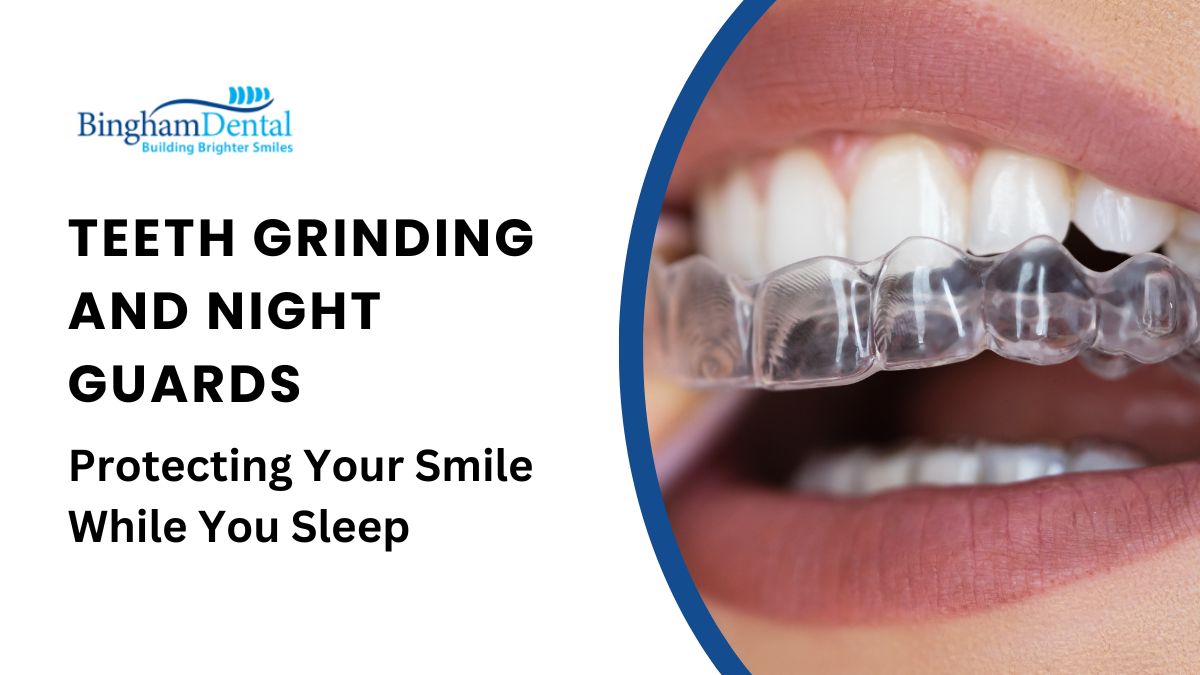
The most practical and widely recommended solution for sleep bruxism is a custom-made night guard — a removable oral appliance worn during sleep that creates a protective barrier between the upper and lower teeth. Because it’s custom-fabricated from impressions of your specific teeth, it fits securely, stays in place during sleep, and distributes grinding forces more evenly to reduce wear on the teeth and strain on the jaw joint.
Over-the-counter night guards are available at drugstores, but they’re often bulky, uncomfortable, and don’t fit as precisely — which can actually make some patients less likely to wear them consistently. A custom guard from your dentist is generally worth the investment for long-term comfort and compliance.
Conclusion
Bruxism is a common condition that many people don’t know they have until dental damage or jaw discomfort signals a problem. A custom night guard is a simple, effective way to protect your teeth and ease the strain on your jaw — and the sooner it’s addressed, the more damage you can prevent.
Frequently Asked Questions
How do I know if I grind my teeth?
Common clues include morning jaw soreness, headaches, increased tooth sensitivity, and a bed partner noticing the sound. Your dentist can also identify wear patterns on your teeth during a routine exam.
Will a night guard fix teeth grinding completely?
A night guard protects your teeth from the effects of grinding but doesn’t stop the grinding behavior itself. Addressing contributing factors like stress, sleep disorders, or bite issues may also be part of a broader plan.
How long does a custom night guard last?
With proper care, a custom night guard can last several years, though patients who grind heavily may wear through them faster. Regular checkups allow your dentist to monitor its condition.
Is a store-bought night guard just as good?
Over-the-counter guards can provide some protection, but they’re often less comfortable and less precisely fitted than custom guards, which can affect how consistently patients wear them. Custom guards are generally more effective in practice.
Can children grind their teeth too?
Yes — bruxism is fairly common in children, particularly during periods of stress or when new teeth are coming in. It often resolves on its own, but a dentist should evaluate it if wear or symptoms develop.
Protect Your Teeth at Bingham Dental
If you’ve noticed signs of teeth grinding or been told by a partner that you clench your jaw at night, our team can evaluate the situation and fit you with a custom night guard that protects your smile.
Call (801) 250-7422 or book an appointment online with our Magna, UT dental team.