Coffee in the morning, a glass of wine at dinner, the occasional soda — all of it adds up over the years, gradually dulling the natural brightness of your teeth. If you’ve noticed your smile isn’t quite as white as it used to be, you’re not alone, and you’re not without options. This guide breaks down everything Magna, UT residents should know about professional teeth whitening, how it compares to at-home options, and how to get real, lasting results.
Why Teeth Discolor in the First Place
Before deciding on a whitening method, it helps to understand what you’re dealing with. Tooth discoloration generally falls into two categories:
Extrinsic stains sit on the surface of the tooth and are caused by things like coffee, tea, red wine, tobacco, and certain foods. These respond well to whitening treatments and even good brushing habits.
Intrinsic stains occur beneath the enamel surface, often from aging, certain medications (like tetracycline taken during childhood), excessive fluoride exposure, or trauma to the tooth. These stains are more stubborn and may need a stronger whitening approach — or, in some cases, a different cosmetic solution like veneers.
A quick conversation with your dentist can usually clarify which type of staining you’re dealing with, and that determines which whitening approach will actually work.
In-Office Professional Whitening
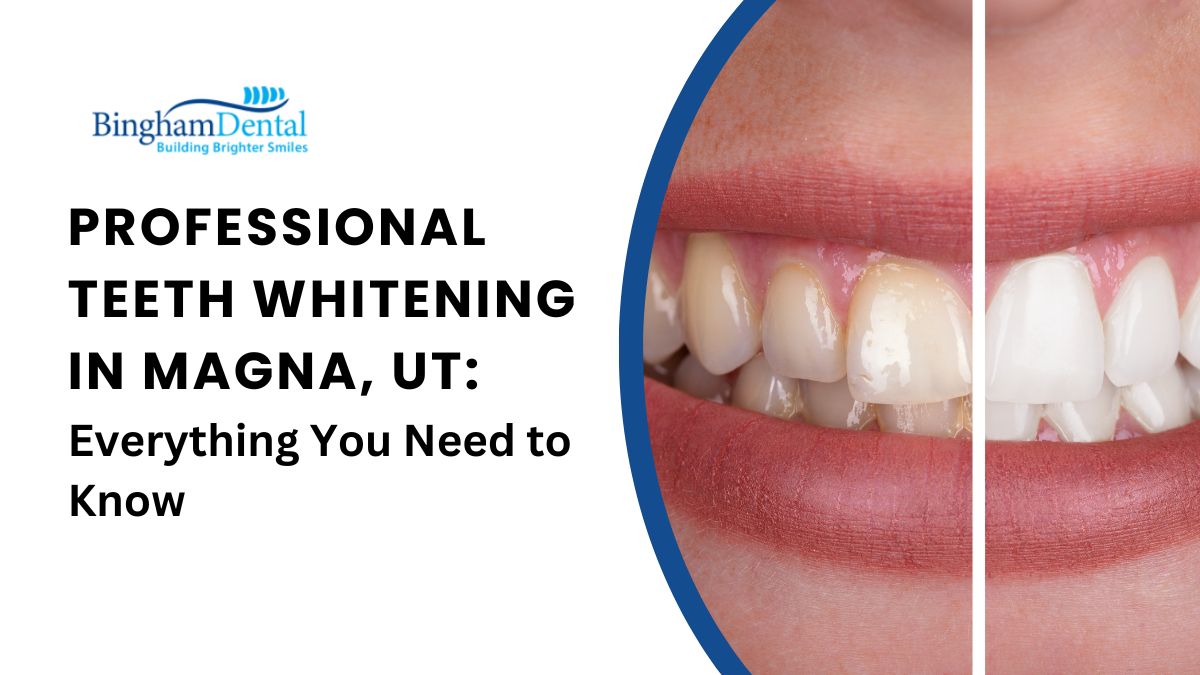
In-office whitening is the fastest way to see a dramatic difference. During a single appointment — typically around 90 minutes — a dental professional applies a concentrated whitening gel directly to your teeth under controlled, supervised conditions. Because the process happens in a clinical setting, stronger whitening agents can be used safely than what’s available over the counter, and you walk out with visible results the same day.
This option tends to appeal to patients with an upcoming event — a wedding, reunion, or job interview — who don’t want to wait weeks for gradual improvement.
At-Home Professional Whitening
Not everyone wants (or needs) same-day results, and that’s where at-home professional options come in.
Custom Take-Home Whitening Trays
This is the gold standard for at-home whitening. Your dentist creates a mold of your teeth to make custom-fitted trays, which you fill with professional-strength whitening gel and wear as directed — usually for one to two hours a day, or overnight, depending on the formula. Most patients see results within three to five days, with full results developing over ten to fourteen days. Because the trays are custom-fitted, the gel covers every tooth evenly, which isn’t always the case with generic store-bought trays.
Teeth-Whitening Strips
Whitening strips are thin, flexible strips coated with a hydrogen peroxide gel, worn directly on the upper and lower teeth for about 30 minutes, typically twice a day. They’re widely available and moderately effective for surface stains, though results are generally less dramatic and less even than custom trays.
Paint-On Whiteners
These over-the-counter products use a small brush to apply a gel directly to the teeth, which hardens into a thin film. They’re generally the least effective professional-adjacent option and work best for very minor touch-ups rather than significant whitening.
Whitening Toothpaste and Mouthwash
The least intensive — and least expensive — option. These products use mild abrasives to lift surface stains but don’t actually change the underlying shade of your enamel. Think of them as maintenance tools rather than a true whitening treatment.
In-Office vs. At-Home: Which Should You Choose?
| Factor | In-Office Whitening | At-Home Trays |
| Speed of results | Immediate (same visit) | 3–14 days |
| Strength | Highest concentration | Professional-grade, gradual |
| Supervision | Dentist-supervised | Dentist-prescribed, self-administered |
| Best for | Upcoming events, dramatic change | Gradual improvement, sensitive teeth |
Many patients actually combine the two: an in-office session for immediate impact, followed by take-home trays to maintain and touch up results over time.
What About Sensitivity?
Tooth sensitivity is the most common side effect of whitening, especially with stronger in-office treatments. It’s usually temporary and resolves within a day or two. If you have a history of sensitive teeth, let your dentist know beforehand — they may recommend a desensitizing toothpaste before and after treatment, or adjust the concentration and timing of your whitening plan accordingly.
Setting Realistic Expectations
Whitening works best on natural, healthy enamel with surface staining. It won’t change the color of existing crowns, veneers, fillings, or bonding, which means if you have visible dental work in your smile line, your dentist may recommend planning around it so your whitened natural teeth match your existing restorations. Whitening also isn’t permanent — most patients see results last anywhere from six months to two years depending on diet and habits, with touch-up treatments extending that timeline.
Why Professional Guidance Matters
It’s tempting to grab a box of strips at the pharmacy and call it done, and for very mild staining, that might be enough. But a professional evaluation catches things store-bought kits can’t: cavities or gum issues that should be addressed first, uneven enamel that could whiten unevenly, or intrinsic staining that won’t respond to typical whitening at all. Getting evaluated first means you invest in a method that will actually work for your specific teeth, rather than guessing.
Frequently Asked Questions
How white will my teeth actually get? This depends heavily on your starting shade and the type of staining you have. Surface stains from coffee, tea, or wine typically respond well, often lightening several shades. Deeper, intrinsic staining tends to respond more modestly. A dentist can give you a realistic expectation based on your specific teeth rather than a generic promise.
Is whitening safe for my enamel? When performed under professional guidance, whitening is considered safe for healthy tooth enamel. That said, whitening isn’t recommended for everyone — patients with certain existing dental work, untreated decay, or specific medical conditions may need a modified approach, which is why a dental evaluation beforehand matters.
Why did my teeth get sensitive after whitening? Temporary sensitivity is a common, expected side effect, especially with stronger in-office treatments. It typically resolves within a day or two. If sensitivity is a concern going in, your dentist can adjust the concentration or timing of treatment, or recommend a desensitizing toothpaste before and after.
Can I whiten my teeth if I have fillings or crowns in my smile line? Whitening only affects natural enamel — it won’t lighten existing dental work. If you have visible restorations, it’s worth discussing this with your dentist ahead of time so you understand how your final result will look, and whether any restorations might eventually need to be updated to match your new shade.
How often can I safely whiten my teeth? This varies by method and your specific enamel condition, but over-whitening can increase sensitivity without necessarily improving results further. Your dentist can recommend a maintenance schedule, whether that’s periodic touch-ups with custom trays or occasional in-office sessions, based on your lifestyle and staining habits.
Is in-office or at-home whitening more effective long-term? Both can be effective; the difference is mostly speed versus gradual improvement. Many patients get the best of both by starting with in-office whitening for a dramatic initial result, then using custom trays periodically to maintain that shade over time.
Get Your Brightest Smile at Bingham Dental
Bingham Dental in Magna, UT offers both in-office whitening for immediate results and custom take-home trays for gradual, professional-grade brightening — with a dental team who can help you decide which approach fits your goals, your timeline, and your teeth.
Bingham Dental 8370 West 3500 South, Magna, UT 84044 (801) 250-7422 Open Mondays 12:00 PM – 7:00 PM; Tuesday through Thursday 7:00 AM – 5:00 PM
Schedule a whitening consultation today and find out which option will get you to your brightest smile.