If your child’s dentist has recommended dental sealants for kids at a recent checkup, it’s a reasonable moment to want more information before saying yes. The procedure is quick and well-studied, but most parents still have the same handful of questions.
Here’s a straightforward answer to each one.
What Dental Sealants for Kids Actually Do
A sealant is a thin coating painted onto the chewing surface of a back tooth, where deep grooves make it easy for food and bacteria to get trapped and hard for a toothbrush to fully clean. Once it hardens, it forms a smooth barrier that blocks out the decay-causing buildup that leads to cavities.
Molars and premolars have naturally uneven, pitted surfaces that are difficult for even a careful brusher to clean completely, especially for kids who are still developing good brushing technique. Dental sealants for kids essentially smooth over those hard-to-reach grooves, turning a cavity-prone surface into one that’s much easier to keep clean.
The Right Age for Sealants
Sealants work best when applied soon after a permanent molar erupts, before any decay has a chance to start — which typically means somewhere between ages 6 and 16, as the first and second sets of permanent molars come in. Getting them placed close to eruption gives the tooth the longest possible window of protection.
What the Procedure Involves
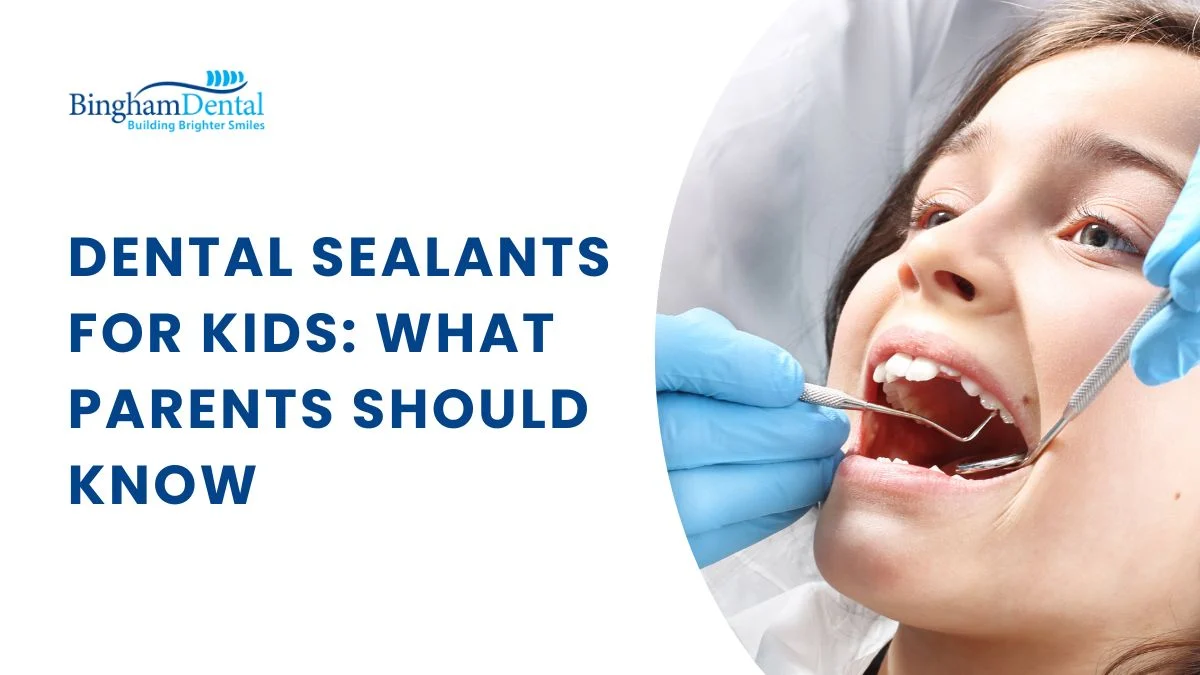
The tooth is cleaned and dried, the sealant material is painted into the grooves, and a curing light hardens it in seconds. There’s no drilling, no anesthesia, and no discomfort — most kids barely notice more than the taste of the material, and the whole process takes just a few minutes per tooth.
How Effective They Really Are
Sealed molars develop meaningfully fewer cavities than unsealed ones, with research showing decay reduced by up to 80% on treated surfaces. Children who don’t have sealants are considerably more likely to have untreated cavities in that same age range, which is part of why dentists recommend them so consistently.
Cost and Insurance for Kids
Sealants are one of the least expensive procedures in preventive dentistry, and because they’re classified as preventive rather than restorative care, most dental insurance plans — including many state Medicaid programs — cover them fully or nearly fully for children.
Common Parent Concerns
- Safety of the material: sealants contain only trace amounts of BPA, well below levels considered a health concern by dental and medical authorities.
- How long they last: sealants can protect a tooth for several years and are checked at routine cleanings, with reapplication if they wear down.
- Whether they replace brushing: sealants protect chewing surfaces specifically — regular brushing and flossing are still essential for the rest of the tooth.
Preparing Your Child for the Visit
There’s very little to prepare for, which is part of what makes sealants such an easy addition to a routine visit. There’s no needle, no drilling, and no numbing involved, so most kids can go straight back to school or normal activities afterward without any downtime or dietary restrictions beyond the usual.
Framing the visit in simple, low-pressure terms — a special coating that helps keep their teeth strong — tends to work well for younger kids who might otherwise feel nervous about anything described as a dental procedure.
Which Teeth Typically Get Sealed
The first and second permanent molars are the usual priority, since they have the deepest grooves and arrive at predictable ages — around 6 and 12 — making them easy to catch right when they erupt. Premolars are sometimes sealed too, particularly if they have noticeably deep pits or a family history of cavities in that area.
Your child’s dentist will typically point out exactly which teeth they recommend sealing and why during a routine exam, rather than sealing every back tooth automatically regardless of its individual shape or risk.
What Happens at the Follow-Up Checkups
Sealants are checked at every routine cleaning after they’re placed, mostly just a quick visual and tactile check to confirm they’re still intact and doing their job. If a small area has worn away, it can usually be touched up in minutes during that same visit, without needing to schedule anything separate.
Talking to Your Child About the Visit
Kids generally do best when the explanation matches their age — a young child might just need to hear it’s a special coating that helps keep cavities away, while an older kid can usually understand the basic idea of protecting the grooves in their teeth. Letting them know beforehand that there’s no shot and no drilling tends to ease any nerves about the visit.
Many offices also let a curious kid watch part of the process on a sibling’s tooth or a model first, which can turn an unfamiliar procedure into something far less intimidating.
Sealants Alongside Other Pediatric Treatments
Sealants are frequently applied during the same visit as a fluoride treatment or routine cleaning, since none of these procedures interfere with each other and combining them saves a separate trip. Your child’s dentist will typically walk through the full visit plan ahead of time so there are no surprises about what’s happening and why.
If your child also needs orthodontic evaluation down the road, sealants placed early generally aren’t affected by braces later, since braces attach to the front surface of teeth rather than the chewing surface where sealants sit.
Answering the “Is This Really Necessary” Question
It’s a fair question, since sealants are an added step rather than a treatment for an existing problem. The honest answer is that they’re not strictly mandatory the way treating an active cavity is, but the research consistently shows sealed molars develop dramatically fewer cavities than unsealed ones, making them one of the higher-value, lowest-effort recommendations in pediatric dentistry.
A Simple Takeaway for Busy Parents
If you only remember one thing, make it this: sealants take a few minutes, cost very little with or without insurance, and meaningfully lower your child’s odds of a cavity on their back teeth for years afterward. It’s a rare case in dentistry where the effort required is this small relative to the benefit.
Bringing It Up at Your Child’s Next Visit
If sealants haven’t come up yet, it’s perfectly reasonable to ask about them directly rather than waiting for your child’s dentist to bring it up first. A quick look at their back molars during a routine cleaning is usually all it takes to know whether they’re good candidates, and there’s no downside to asking even if the answer turns out to be not yet.
Frequently Asked Questions
Q: Are sealants a good idea for kids?
Yes — dental sealants for kids are one of the most effective, lowest-risk ways to prevent cavities on the back teeth, which is where the large majority of childhood decay occurs.
They’re backed by decades of research and recommended by major dental and public health organizations as a standard part of preventive pediatric care.
Q: What are the downsides of dental sealants?
The main downsides are that sealants can chip or wear down over time and need to be monitored, and they only protect the specific surfaces they cover.
They also don’t work on a tooth that already has a cavity — in that case, a filling is needed first, since sealants are strictly a preventive measure, not a treatment for existing decay.
Q: Is it appropriate to get sealants on my 6-year-old’s molars?
Yes — age 6 is actually the ideal window, since that’s typically when the first permanent molars erupt, and sealing them early gives the longest possible protection.
Waiting longer doesn’t make sealants unsafe, but it does give decay more time to start before the protective barrier is in place.
Q: Does dental insurance cover sealants for kids?
Most dental insurance plans, including many Medicaid programs, cover dental sealants for kids at little to no out-of-pocket cost, since they’re classified as preventive care.
Exact coverage varies by plan, so it’s worth a quick check with your insurer, but cost is rarely a barrier for this particular treatment.
Conclusions
Dental sealants for kids are quick, well-researched, and typically low or no cost thanks to preventive insurance coverage. For a procedure that takes minutes, the years of cavity protection it buys are hard to match. Most parents find the decision easy once they understand what’s actually involved.
To find out if your child’s molars are ready, Bingham Dental in Magna can check at their next cleaning.