
Missing teeth can affect far more than your appearance. They change how you eat, how you speak, and over time, even how your jaw looks and functions. Among the options available for replacing missing teeth, dental implants stand out as the most durable, most natural-feeling, and most health-preserving solution available today. At Bingham Dental, our team uses the latest implant techniques to ensure your experience is comfortable, seamless, and transformative.
What Is a Dental Implant?
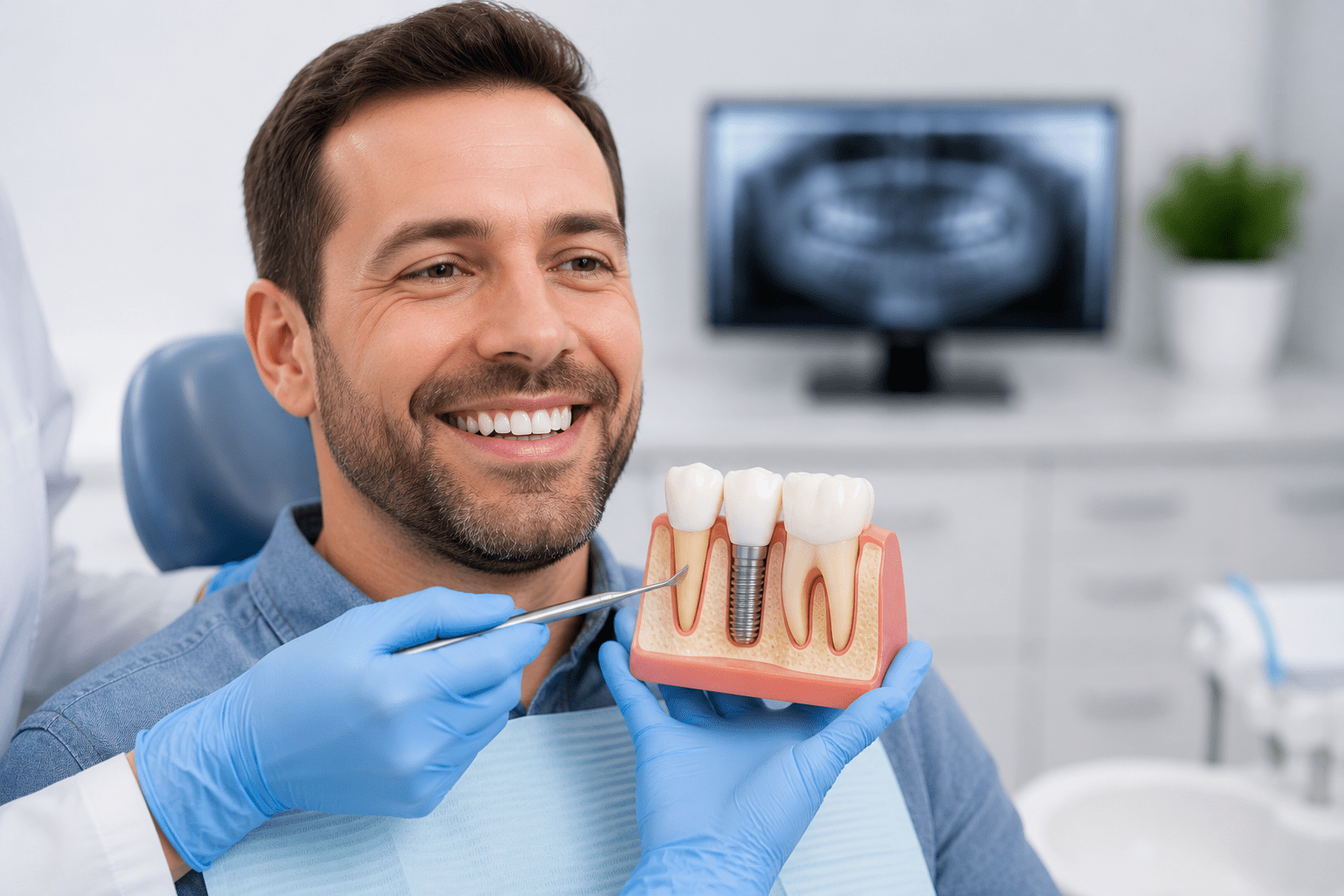
A dental implant is a small titanium post surgically placed into the jawbone, where it functions as an artificial tooth root. Over a period of a few months, the implant bonds with the surrounding bone through a biological process called osseointegration. Once fully integrated, a custom-made crown is attached to the top, creating a replacement tooth that looks, feels, and functions just like a natural one.
Implants can replace a single tooth, several teeth, or — in combination with a bridge or denture — an entire arch, making them one of the most versatile options in restorative dentistry.
The Key Advantages of Dental Implants
They preserve jawbone health. When a tooth is lost, the jawbone beneath it gradually shrinks from lack of stimulation. Because an implant replaces the root itself, it helps maintain bone density over time — something bridges and dentures cannot do.
They don’t affect surrounding teeth. Traditional bridges require the teeth on either side of the gap to be reshaped and used as anchors. Implants are self-supporting, leaving neighboring healthy teeth completely untouched.
They’re built to last. With proper care, the implant post itself can last a lifetime, though the crown on top may need replacement after many years of normal wear — a minor consideration compared to the longevity of the implant itself.
They look and feel completely natural. Because the crown is custom-crafted to match your surrounding teeth in size, shape, and color, most patients forget which tooth is the implant within months of completing treatment.
Who Is a Candidate for Dental Implants?
Most adults in good general health with adequate jawbone density are candidates for implants. Certain factors — such as uncontrolled gum disease or significant bone loss — may need to be addressed before placement, sometimes with bone grafting to build up the area. A thorough evaluation, including imaging of the jaw, helps our team determine the right plan for your situation.
What to Expect During Treatment
Implant treatment happens in stages: an initial consultation and planning phase, placement of the implant post, a healing period for osseointegration, and finally, placement of the permanent crown. While the full process can take several months, most of that time is healing rather than active dental procedures. The end result is a permanent, low-maintenance tooth replacement that requires only normal brushing and flossing.
Conclusion
Dental implants represent one of the most significant advances in modern dentistry, offering a replacement option that closely mirrors the look, function, and health benefits of a natural tooth. If you’re living with one or more missing teeth, a consultation can help you understand whether implants are the right path for restoring your smile and your confidence.
Frequently Asked Questions
How long do dental implants last?
With proper oral care, the implant post itself can last decades — often a lifetime. The crown on top may need replacement after many years due to normal wear, similar to other dental restorations.
Is getting a dental implant painful?
The procedure is performed with local anesthesia, and most patients report that discomfort during recovery is manageable and similar to having a tooth extracted, typically resolving within a few days.
What if I’ve been told I don’t have enough bone for an implant?
Bone grafting is a common preparatory step for patients with bone loss, and it can often be done to create a suitable foundation for the implant. Your dentist will discuss this if it applies to your situation.
Am I too old to get dental implants?
Age alone isn’t a barrier. Overall health and bone quality are the primary considerations, both of which are evaluated during your consultation.
How do implants compare in cost to bridges or dentures?
Implants often have a higher upfront cost, but their long-term durability and the health benefits they provide often make them a cost-effective choice over many years.
Rediscover the Joys of Everyday Life at Bingham Dental
Dr. Hamblin and Dr. Cho use the latest implant techniques to make the process as comfortable and effective as possible. We’re proud to offer dental implants as part of our comprehensive care for the Magna, UT community.
Call (801) 250-7422 or request a consultation online to learn more about dental implants at Bingham Dental.