A cracked tooth rarely happens at a convenient time, and the first few minutes matter more than most people realize. If you’re searching for a cracked tooth what to do right now, the short version is that what you do first can genuinely affect how the tooth ends up being treated.
Here’s a clear, step-by-step answer, along with a few common mistakes worth avoiding.
First Steps in the First Few Minutes
- Rinse gently with warm water: to clear away any debris and get a better look at the damage.
- Save any broken pieces: if you can find them, rinse and store them in milk or a damp cloth in case your dentist can use them.
- Apply a cold compress: to the outside of your cheek near the affected tooth to reduce swelling.
- Take an over-the-counter pain reliever: like ibuprofen if needed, following standard dosing guidance.
- Apply gauze if there’s bleeding: with gentle pressure until it stops.
What Not to Do
Avoid chewing on that side of your mouth until you’ve been seen, and skip very hot or cold foods and drinks, which can trigger sharp pain in an exposed tooth. It’s also worth resisting the urge to poke at the crack with your tongue or a finger, since that can introduce bacteria or worsen the damage.
Common Causes Worth Knowing
- Biting something hard: ice, popcorn kernels, or hard candy are common everyday culprits behind a sudden crack.
- A blow to the face: sports injuries and falls are a frequent cause, especially without a mouthguard.
- Grinding or clenching: ongoing pressure from nighttime grinding gradually weakens tooth structure over time.
- Large existing fillings: a tooth with a big filling has less natural structure left and is more prone to cracking under pressure.
- Temperature extremes: biting into something very hot right after something very cold can stress enamel enough to cause a crack.
How Urgent Is It, Really?
This depends heavily on the crack itself. A shallow chip that doesn’t cause pain can often wait a day or two for a regular appointment. A crack that causes sharp pain when biting, sensitivity to temperature, or visible damage reaching below the gumline needs same-day or next-day attention, since it may indicate the crack has reached the tooth’s inner pulp.
Part of figuring out cracked teeth is to honestly assess your own symptoms rather than hoping a painful crack will settle down on its own. Pain that’s getting worse, not better, over a day or two is a strong signal that waiting longer isn’t the right move.
What Your Dentist Will Likely Do
Treatment depends on the crack’s size and location. Minor chips are often repaired with bonding in a single visit. Larger cracks that affect more of the tooth structure may need a crown for protection and support. If the crack has reached the nerve, root canal treatment may be necessary before the tooth is restored.
Your dentist will typically start by asking about your symptoms and how the crack happened, take an X-ray to see how far it extends, and test the tooth’s response to temperature and pressure. That exam is really the missing piece of a cracked tooth. What to do — matching the right treatment to the actual extent of the damage rather than guessing from how it looks or feels.
Preventing Future Cracks
Avoid chewing ice, hard candy, or using your teeth to open packaging, all of which are common causes of cracked teeth. A nightguard is also worth discussing with your dentist if you grind your teeth, since grinding puts steady, repeated stress on tooth structure over time.
Types of Cracks and What They Mean
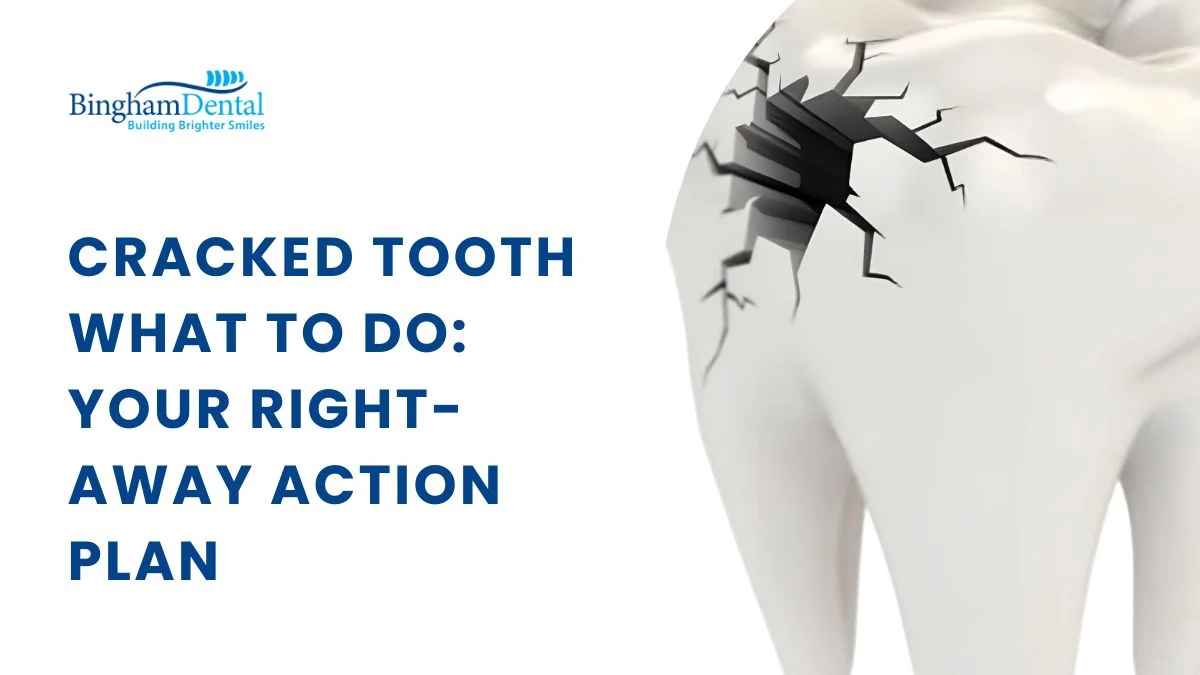
Not all cracks are created equal. A craze line is a shallow surface crack that’s usually cosmetic and painless. A fractured cusp affects a corner of the tooth and often doesn’t involve the nerve. A crack that extends vertically toward the root is more serious and can sometimes mean the tooth isn’t salvageable, while a split tooth has already separated into distinct segments and typically requires extraction.
Your dentist can usually tell which category a crack falls into with an exam and an X-ray, which is why getting looked at promptly matters even if the pain feels manageable at first.
Why Waiting Rarely Helps
A crack doesn’t heal or seal itself over time the way some minor injuries do elsewhere in the body. Left alone, a small crack is more likely to deepen with continued chewing pressure, eventually reaching the nerve or splitting the tooth entirely — both of which usually mean more involved, more expensive treatment than addressing it early would have required.
Even a crack that isn’t currently painful is worth mentioning at your next visit, since a dentist may spot early warning signs on an X-ray well before symptoms show up on their own.
If It Happens to Your Child
Kids crack teeth too, often from falls, sports, or biting down on something unexpected. The same first steps apply — rinse, save any pieces, apply a cold compress, and manage pain with an appropriate dose of children’s pain reliever — but call your dentist promptly, since a child’s developing teeth and jaw can make timing more important than it might be for an adult.
Reducing Your Risk Going Forward
A properly fitted mouthguard during sports, avoiding ice and hard candy as a habit rather than an occasional slip, and addressing nighttime grinding with a nightguard are the three most effective, low-effort ways to lower your odds of a repeat crack. None of these guarantee it’ll never happen again, but each one meaningfully reduces the everyday wear and sudden impacts that cause most cracks in the first place.
A Quick Mental Checklist for Next Time
Rinse with warm water, save any broken pieces in milk, apply a cold compress, take an appropriate pain reliever, and call your dentist the same day if there’s pain or visible damage below the gumline. Keeping this short list in mind ahead of time means you won’t be trying to remember the right steps while you’re already uncomfortable.
The Bottom Line
A cracked tooth is common, rarely as dire as it feels in the moment, and almost always treatable once you’re seen. Acting quickly, rather than waiting to see if it resolves on its own, is really the single biggest factor in how smoothly your treatment and recovery go.
Frequently Asked Questions
Q: How long can I leave a cracked tooth?
A minor, painless chip can often wait a few days for a regular appointment, but a cracked tooth causing pain, sensitivity, or visible damage should be seen within a day or two to prevent further damage or infection.
The safest cracked tooth is to control pain and protect the area first, then getting it evaluated rather than guessing how long it’s safe to wait.
Q: Can a tooth crack heal on its own?
No — unlike bone, a cracked tooth cannot heal itself, since enamel and dentin have no capacity to regenerate or repair once damaged.
A small crack that isn’t bothering you might not get worse quickly, but it also won’t improve without treatment, and it can progress further with continued biting pressure.
Q: Is it okay to live with a cracked tooth?
It’s generally not advisable to leave a cracked tooth untreated indefinitely, since even a minor crack can worsen over time, deepen, or let in bacteria that lead to infection.
Some very shallow, painless cracks (craze lines) are cosmetic and harmless, but distinguishing those from a crack that needs treatment really requires a dentist’s exam rather than a guess.
Q: What should I do if half my tooth broke off?
If half a tooth breaks off, rinse your mouth gently, save the broken piece in milk or a damp cloth, apply a cold compress to reduce swelling, and see a dentist the same day if at all possible.
This level of damage usually exposes the inner layers of the tooth and carries a real risk of infection or nerve involvement, so it should be treated as an urgent situation rather than something to schedule around.
Conclusions
Knowing what to do in the first hour genuinely affects the outcome — rinse, protect the area, manage pain, and get it evaluated rather than waiting to see if it improves. Some cracks are minor and easily fixed with bonding. Others need more involved treatment, and delaying only narrows your options.
If you’re dealing with a cracked tooth right now, Bingham Dental in Magna offers emergency dental care to get you seen as quickly as possible.