If you’re staring at an insurance breakdown wondering whether a proposed treatment counts as routine care or an added expense, you’re not alone — are sealants considered preventive is one of the most common questions patients ask before agreeing to the procedure.
The short answer is yes, but understanding why matters, because it affects both how much you’ll pay and how your dentist talks about the treatment.
The Short Answer: Yes
Sealants are classified as a preventive treatment in dentistry, alongside cleanings, fluoride treatments, and routine exams. They’re applied to healthy teeth before decay has a chance to start, which is the defining feature that separates preventive care from restorative treatment.
Dental associations and most insurance carriers define preventive care using the same standard: a treatment applied before a problem develops, with the goal of avoiding it altogether. Sealants fit that definition precisely, which is exactly why the question of are sealants considered preventive comes up so often in patient conversations about cost and coverage.
How Sealants Are Actually Applied
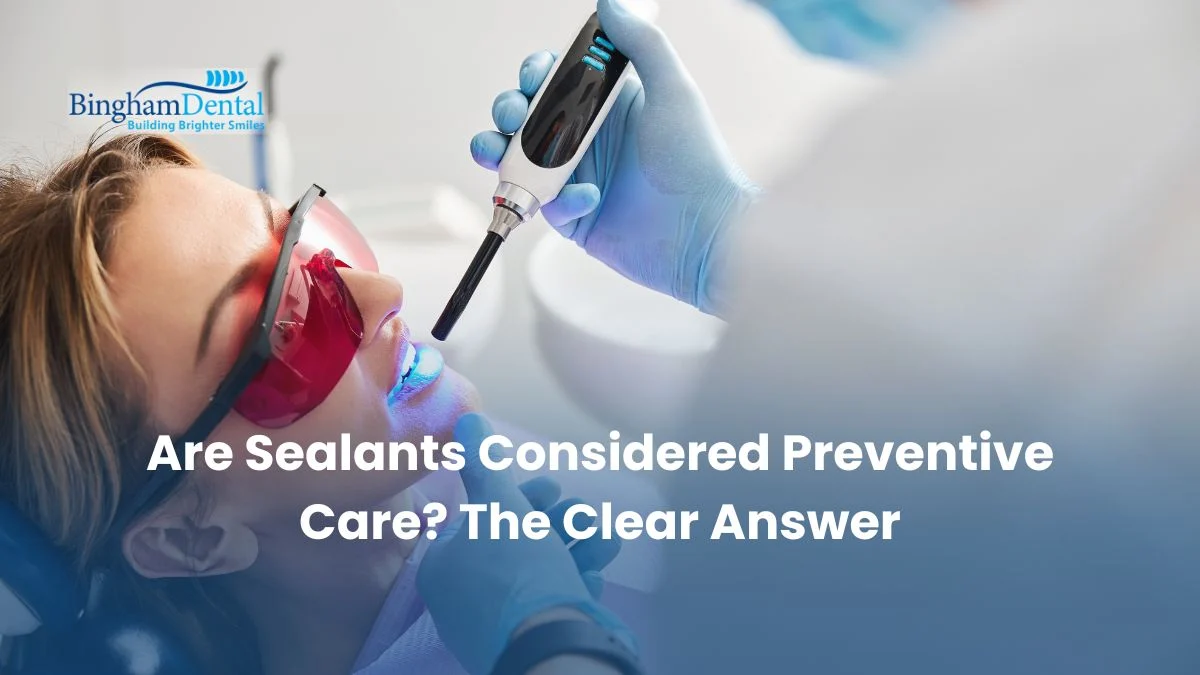
The application process is quick and doesn’t require any numbing or drilling in most cases. The tooth is cleaned, the surface is prepared with a mild conditioning solution to help the sealant adhere, and the liquid resin is painted directly into the grooves. A curing light hardens it within seconds, and the whole procedure typically takes just a few minutes per tooth.
Because it’s so fast and non-invasive, sealants are usually added on to a routine cleaning or checkup appointment rather than requiring a separate visit, which is part of what makes them such a convenient piece of preventive care.
Preventive vs. Restorative: Where the Line Is
The distinction matters more than it might seem. Preventive treatments, like sealants, are applied to protect a healthy tooth from future problems. Restorative treatments, like fillings or crowns, repair damage that has already happened. Sealants fall firmly on the preventive side because there’s no decay present when they’re placed.
Why This Classification Affects What You Pay
Because sealants are considered preventive, most dental insurance plans cover them at a high rate — often 80% to 100% — for permanent molars, especially in children and teens. Preventive treatments typically don’t count against an annual deductible the way restorative work does, which is why sealants tend to be one of the more affordable procedures on a treatment plan.
Without insurance, sealants still cost far less than the fillings or crowns they’re designed to prevent, which is another reason sealants are considered preventive matters practically and not just in an insurance handbook sense. Paying a small amount now for a sealant is almost always cheaper than paying for a filling later on the same tooth.
What Sealants Actually Prevent
Applied to the deep grooves of back teeth, sealants create a barrier that keeps food and bacteria from settling into spots a toothbrush can’t fully reach. Research shows sealed molars develop significantly fewer cavities than unsealed ones — children without sealants have notably higher rates of untreated decay in that age group.
Why Some People Skip Them Anyway
Not realizing they’re covered: some patients assume any additional treatment means an out-of-pocket cost and decline without checking their benefits.
Believing brushing is enough: good brushing habits still can’t fully clean the deep pits and fissures sealants are designed to protect.
Thinking they’re only for kids: adults without a history of fillings on a molar can benefit from sealants too, not just children.
How This Compares to Other Preventive Treatments
Fluoride treatments and routine cleanings are the other two pillars of preventive dentistry, and sealants fit alongside them rather than replacing either one. Fluoride strengthens the entire tooth surface against decay broadly, while sealants target one specific weak spot — the deep grooves of molars — where fluoride alone doesn’t offer full protection.
Because all three are classified as preventive, most insurance plans bundle them into the same low-cost or no-cost category, which is part of why a dentist recommending sealants is rarely proposing an expensive add-on. It’s simply one more layer of the same preventive strategy already covering your cleanings and fluoride visits.
What Happens If You Decline Sealants
Declining sealants doesn’t cause immediate harm, but it does leave the deep grooves of your molars more exposed to the plaque and bacteria that lead to cavities over time. Are sealants considered preventive enough to be worth the few minutes it takes to apply them? For most patients with deep-grooved molars, dentists would say yes, given how much more involved and expensive a filling or crown becomes later.
Sealants for Adults, Not Just Kids
While sealants are most commonly discussed in the context of children’s permanent molars, adults without a history of decay on a particular tooth can benefit too. Any molar with deep grooves and no existing fillings is a reasonable candidate, regardless of age, and the preventive classification and insurance treatment generally apply the same way.
Adult patients sometimes assume sealants are something they’ve simply aged out of, but that’s more a matter of habit in how dental offices talk about them than an actual clinical limit. It’s worth asking your dentist directly whether any of your own molars would benefit.
How Long the Protection Actually Lasts
A well-placed sealant can hold up for five years or longer, though it’s checked at every routine cleaning to make sure it’s still intact. If a sealant chips or wears down in one spot, it can typically be touched up rather than fully redone, keeping the cost and time investment minimal over its full lifespan.
How This Fits Into a Broader Prevention Plan
No single treatment prevents every cavity, and sealants are best understood as one layer among several. Daily brushing and flossing, a reasonable diet, fluoride exposure, and regular checkups all work together, with sealants specifically closing the one gap that brushing alone tends to miss — the deep grooves on chewing surfaces.
Patients who combine all of these habits consistently tend to see the fewest cavities over time, which is really the goal behind classifying any of these treatments as preventive in the first place.
A Note on Timing
Sealants work best applied as soon as possible after a molar fully erupts, before it’s had any real exposure to decay-causing bacteria in the deep grooves. Waiting even a year or two past eruption doesn’t make sealants pointless, but it does narrow the window during which they offer maximum benefit.
A Quick Recap of the Insurance Basics
Preventive treatments — cleanings, exams, fluoride, and sealants — generally fall under the highest coverage tier on most dental plans, often 80% to 100% with no deductible applied. Basic restorative work, like fillings, typically sits in a middle tier around 70% to 80%, while major work like crowns or root canals is usually covered less generously.
Understanding which tier a treatment falls into before you agree to it is one of the simplest ways to avoid an unexpected bill, and your dental office’s billing team can usually verify your specific coverage before your appointment.
Frequently Asked Questions
Q: Are kids sealants covered by insurance?
Yes, most dental insurance plans cover sealants for children at a high percentage, often 80% to 100%, since they’re classified as preventive care.
Coverage details vary by plan and sometimes by the specific tooth, so it’s worth confirming with your insurer, but sealants are rarely a major out-of-pocket expense for kids.
Q: What are the downsides of dental sealants?
The main downsides are that sealants can wear down over time and need to be checked or reapplied, and they only protect the chewing surfaces they cover, not the sides of teeth or the gumline.
Some parents also raise questions about BPA exposure from sealant material, though the amount involved is considered trace and safe by dental health authorities.
Q: Why doesn’t everyone get dental sealants?
Not everyone needs sealants — dentists typically recommend them for teeth with deep grooves that are naturally harder to clean, rather than applying them universally to every patient, though the fact that are sealants considered preventive makes them an easy yes for most candidates.
Some adults also simply were never offered them as children, since routine sealant use became more widespread in dental practice over the past few decades.
Q: Can a hygienist do sealants?
In many states, yes — licensed dental hygienists are permitted to apply sealants under a dentist’s supervision, which is part of why the procedure is quick and widely accessible.
The exact rules vary by state dental board, but the procedure itself is straightforward enough that it doesn’t always require the dentist to perform it personally.
Conclusions
Sealants are indeed considered preventive care, which is exactly why they tend to be both affordable and worth prioritizing. They protect healthy teeth before a problem ever starts, rather than fixing one after the fact. For most patients, the cost is low and the payoff is years of avoided fillings.
To find out if your molars are good candidates, ask about sealants at your next visit with Bingham Dental in Magna.